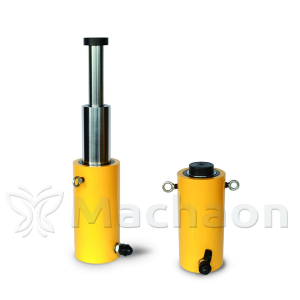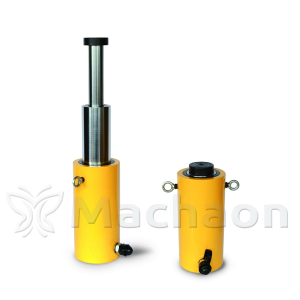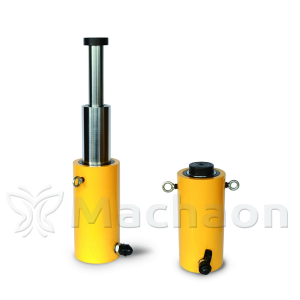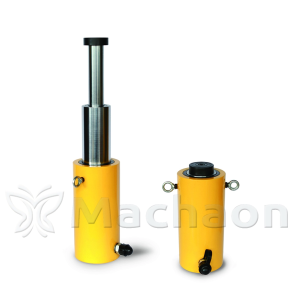
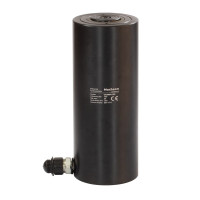
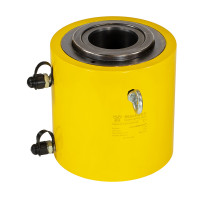
Reference: 6431
Brand: Machaon
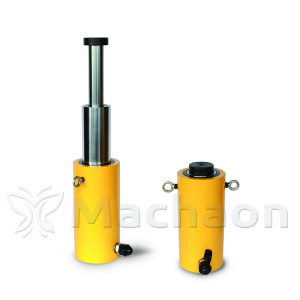
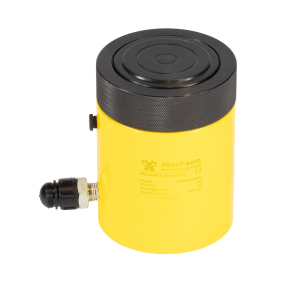
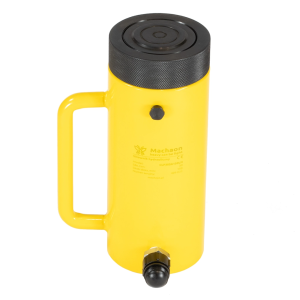
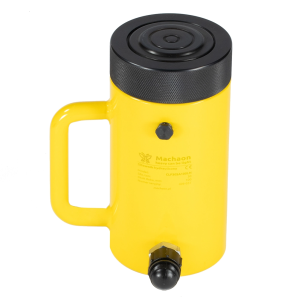
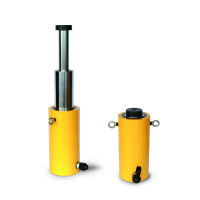
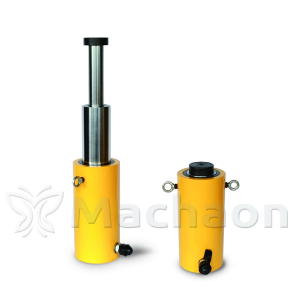
High-Tonnage Telescopic Cylinder CLP30LR600MS
Capacity 150/65/30 ton, Stroke 600 mm

Filter By
Categories
Categories
Capacity, ton
Capacity, ton
Stroke, mm
Stroke, mm
Type
Type
Banner

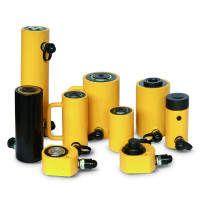
Hydraulic cylinders turn oil pressure into linear force – the most compact way to lift, push, pull, press or hold very heavy loads. Our range covers capacities from 5 t up to 1000 t.
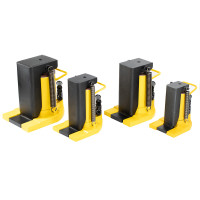
Choose from single- and double-acting cylinders, low height and ultra-low height (pancake) designs, hollow plunger, lock nut, telescopic and aluminium cylinders. Toe jacks for lifting machinery and wedge spreaders are in the same section.
Subcategories
There are 222 products.
Reference: 6431
Brand: Machaon
Reference: 6424
Brand: Machaon
Reference: 6417
Brand: Machaon
Reference: 6400
Brand: Machaon
Reference: 6394
Brand: Machaon
Brand: Machaon
Reference: 6455
Brand: Machaon
Reference: 6448
Brand: Machaon
Reference: 0583
Brand: Machaon
Reference: 0569
Brand: Machaon
Reference: 0552
Brand: Machaon
A hydraulic cylinder consists of several key elements: the cylinder body (barrel), the piston, seals, and one or more ports for the inflow and outflow of the working fluid (usually specialist hydraulic oil). By design, cylinders fall into two main groups: single-acting and double-acting.
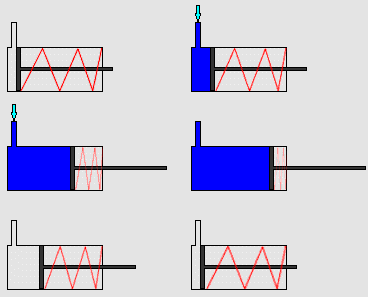
The piston extends when fluid pressure is built up in the cylinder chamber, and returns to its starting position under spring force or under the weight of the lifted load (the latter applies especially to high-force cylinders above 200 t).
All other things being equal, the force generated by this type of cylinder is lower than that of double-acting cylinders, because the spring force must also be overcome on the forward stroke. In most applications, however, the difference is negligible.
The spring acts as the return element. Where the return is carried out by a driven mechanism, another hydraulic cylinder or the weight of the lifted load, the return spring may be unnecessary. This principle is used, among others, in bottle jacks.
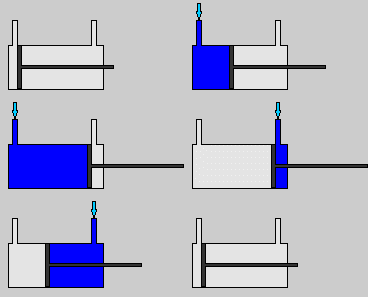
In double-acting cylinders, force is generated on both the forward and the return stroke by building up working fluid pressure in the piston chamber and in the rod chamber respectively.
Note that on the forward stroke the force on the piston rod is higher and the extension speed lower than on the return stroke. This results from the difference in the surface areas the fluid pressure acts on (different effective cross-sectional area).
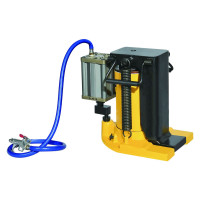
Hydraulic cylinders need an external power source – hydraulic pumps. There are also integrated solutions: cylinders with a built-in pump. Depending on how the pump is driven, you can choose from:
The right type depends on the place of use, the available energy (electricity or compressed air) and the working conditions (occasional or intensive use). Complete the system with hoses, quick couplers and a pressure gauge rated for the working pressure.
Hydraulic cylinders are widely used in many industries, wherever large forces are needed in a compact design. This gives them an extremely wide range of applications. The most important sectors include:
check_circle
check_circle